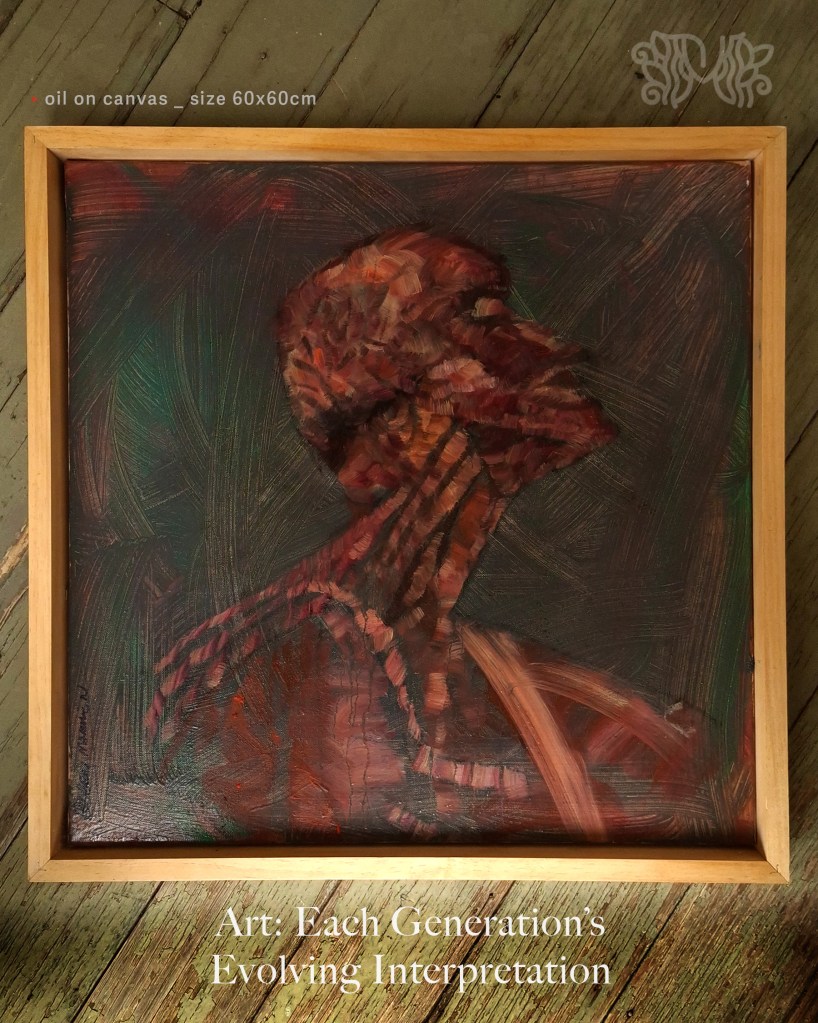
Every generation shapes art to reflect itself. This isn’t just a choice; it’s something that happens naturally, since art describes the world around us. But what art describes is never neutral. It always carries the feeling of its time, the culture’s mood, and the artist’s own perspective. So, art isn’t just a mirror of its era. It’s an interpretation, told in a language that keeps changing.
Looking back at major art movements, this pattern stands out. Renaissance artists aimed for order, balance, and perfect proportions, showing a belief in harmony and reason. Impressionists broke away from that, focusing on brief moments, light, and quick impressions. Later, artists like Pollock and Rothko searched for meaning in pure emotion and abstraction instead of detailed description. Each movement reveals the worries and hopes of its time, as well as the personalities of the artists themselves.
This idea isn’t just about history for me; it feels very personal. In my own work, I feel the urge to reinvent and to find new ways to express what I’m experiencing now. I’m influenced by artists like Gauguin, Van Gogh, and Cézanne, but I can’t just copy what they did. My life in Australia, memories of Kerala, and my changing interests—whether in people, furniture, or even what I call ’emotional beasts’—all shape how I see and paint. My art becomes a conversation with both the past and the present, shaped by my own experiences.
I also realise that my art won’t stay the same over time. Just as I see Gauguin or Freud differently today, someone in the future will look at my work in their own way. They might notice things I never meant to include. They’ll bring their own ideas and questions, seeing my art through the issues of their time. That thought is both humbling and freeing.
Art is never really finished. It’s less about lasting forever and more about being renewed. Every generation creates new art, but also looks at older works in new ways, finding different meanings. Van Gogh, for example, was overlooked during his lifetime, but later generations have recognised him as a visionary, a romantic, an outsider, and a master of colour. The art itself stays the same, but to me, the most exciting thing about art is that it’s always changing. Every painting is an interpretation, and each one invites others to see it in their own way. My job isn’t to lock in a single meaning, but to open up possibilities. I try to show the world as I see and feel it now, knowing that someone else will see it differently in the future, and the process will start over.
This ongoing reinvention is at the heart of Art Rabbithole, my project where I share not just finished pieces, but also the stories, influences, and questions behind them. Through my blog and videos, I want to create a space where art is a living conversation between the past, present, and future. It’s a conversation we can all be part of.
 Art Rabbithole
Leave a comment