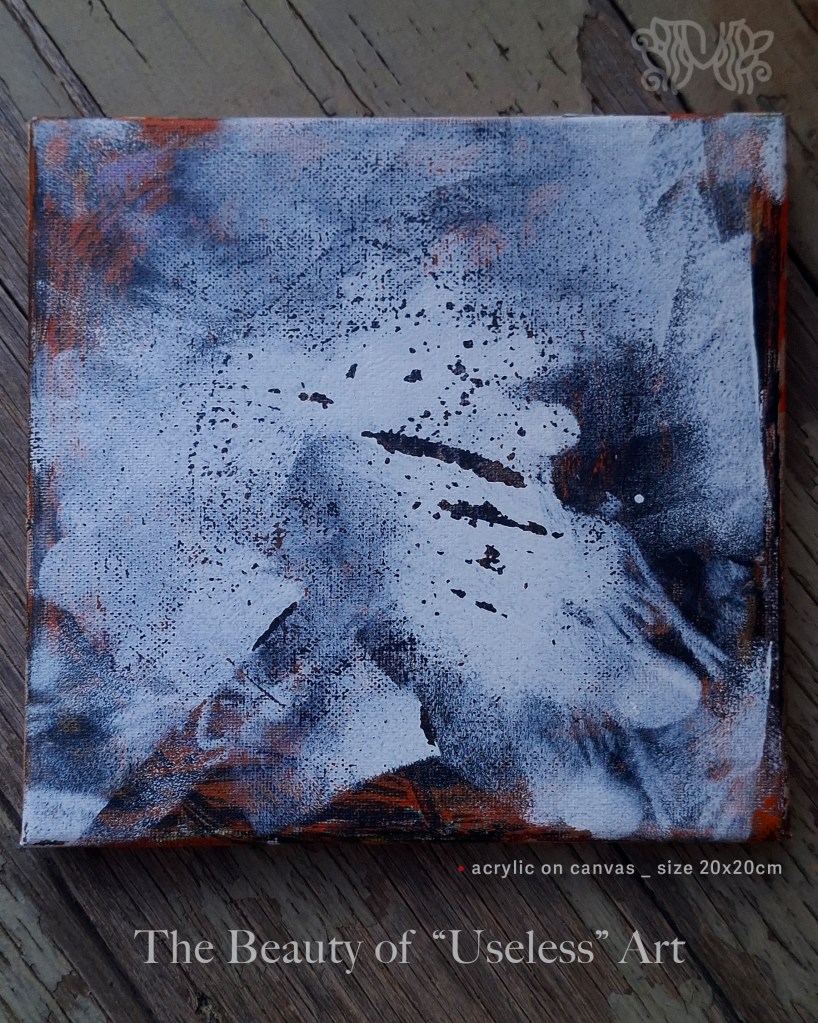
Oscar Wilde once wrote, “All art is quite useless.” At first, this might sound dismissive or even insulting. However, upon closer examination, Wilde’s idea proves to be both profound and liberating. Art isn’t made to serve a direct, practical purpose. It doesn’t feed us, clothe us, or give us shelter. Still, art nourishes us in ways that are just as important as food or shelter. These ways are invisible, not practical, and deeply human.
The moment we ask art, when we expect art to be useful in a purely practical way, we risk taking away what makes it special. Take a chair, for example. It’s meant for sitting. But if we turn that chair into a sculpture that’s oddly shaped and impossible to sit on, its purpose changes. Now, it’s not about supporting the body, but about making us think, feel, and imagine. In this way, what seems like the “uselessness” of art is actually its greatest strength. or, not of what we need to survive, but of who we are. When a society loses touch with its art, it loses a piece of its soul. Without art, we risk becoming efficient machines—productive, functional, and entirely hollow. Art reminds us that we are more than our labour, more than our practical contributions. We are storytellers, meaning-makers, and dreamers.
Think about identity. Our sense of self isn’t “useful” in an economic way, but without it, we can’t find our place in the world. Culture also doesn’t fit into a practical definition. Why do we have traditions, rituals, or shared memories? These things don’t have clear material benefits, but they hold communities together. They give us a sense of belonging, direction, and continuity. In the same way, art helps shape our identity, both as individuals and as a group. It shows us where we come from, what we value, and what we hope to become.
Think of the cave paintings of Lascaux, the plays of Shakespeare, the protest songs of the 1960s, or the street art that blooms on the walls of our cities today. None of these works was made to solve a practical problem, and yet each of them reshaped how people understood themselves and the world. Their impact is undeniable, not because they fed bodies but because they fed minds and spirits.
Art also lets us experience beauty, which can’t really be measured by how useful it is. When we look at a Van Gogh painting or listen to a Beethoven symphony, we aren’t using something—we’re being moved by it. Beauty doesn’t have a practical result, but it can turn despair into hope, silence into conversation, and chaos into order. In this way, art keeps us going, not like bread feeds the body, but like meaning feeds the soul.
So yes, art is “useless.” It can’t be measured by its function. But that’s exactly where its power comes from. Art shapes who we are, both as individuals and as a community. It’s woven into our culture, our identity, and the place where we go beyond just surviving. Without art, we would lose reflection, imagination, and, in the end, a part of ourselves.
 Art Rabbithole
Leave a comment