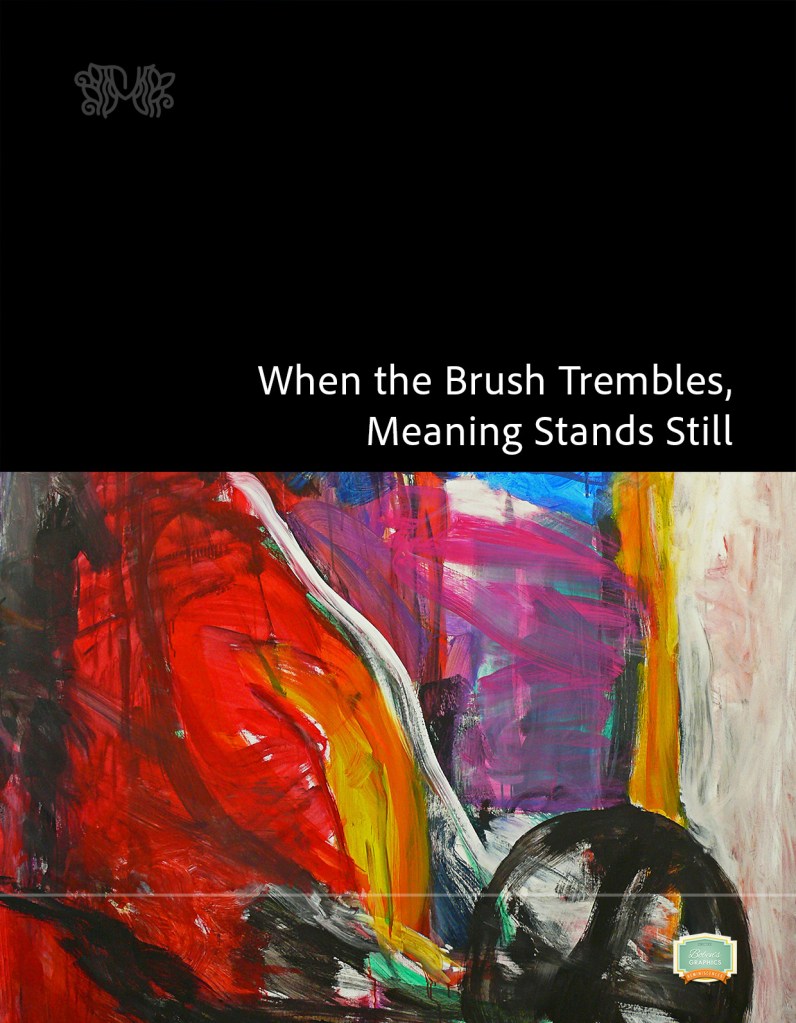
(After Viktor E. Frankl’s “Man’s Search for Meaning”)
When the ground trembles, the character stands still.
That sentence has stayed with me for years, quietly, like a pulse behind everything I create. I didn’t know why it lingered until I read Viktor E. Frankl’s Man’s Search for Meaning. His book showed me the truth inside it: even when everything shakes, a person can still stand through meaning.
In today’s reflection, I return to this book that changed how I see art and life. Some books don’t just inform; they stay with you, shaping how you face a quiet studio, a long night, or an unanswered question. Man’s Search for Meaning is one of those books. It reminds me that art, like life, is not about control but about response—the small decision to continue, to create, to find purpose even in silence.re are books that do not speak loudly, yet their silence follows you everywhere. Frankl’s book is like that—quiet, precise, almost austere. It does not comfort; it invites you to stand still inside your own life.
Frankl wrote from the edge of despair, from the dark pit of the camps where everything human was stripped bare. Yet what he discovered there was not death, but a strange light: the idea that even when freedom is taken, the freedom to choose one’s response remains.
I often think of that when I stand before a blank board. Some days the paint doesn’t move, my hand feels heavy, and everything I know about art collapses into a small, mocking silence. But meaning is a patient visitor. It comes not through success, but through staying.
Frankl said, “Those who have a why to live can bear almost any how.”
Maybe art itself is my why. The work of a brush, the smell of turpentine, the quiet ache of unfinished colour—all of it becomes the small grammar through which I try to speak to life.
Meaning doesn’t arrive as revelation; it grows quietly, like moss on a forgotten wall. You find it in the middle of exhaustion, in the small courage to begin again. I have learned that purpose is not a grand idea. It is the act of not abandoning yourself.
Frankl called it Logotherapy: the search for meaning through work, love, and suffering. I see this in the studio. The work gives direction, love gives warmth, and suffering gives shape. Every canvas becomes a negotiation between despair and dignity.
When I paint, I am often not looking for beauty. I am looking for a reason to continue. In that search, I think I find the same truth Frankl found among the ruins: even when everything falls apart, the human being still has one last power, which is to decide what the fall means. Be that as it may, that’s what art is—a way of deciding what the fall means.
A quiet, stubborn act of choosing life, again and again.
 Art Rabbithole
Leave a comment