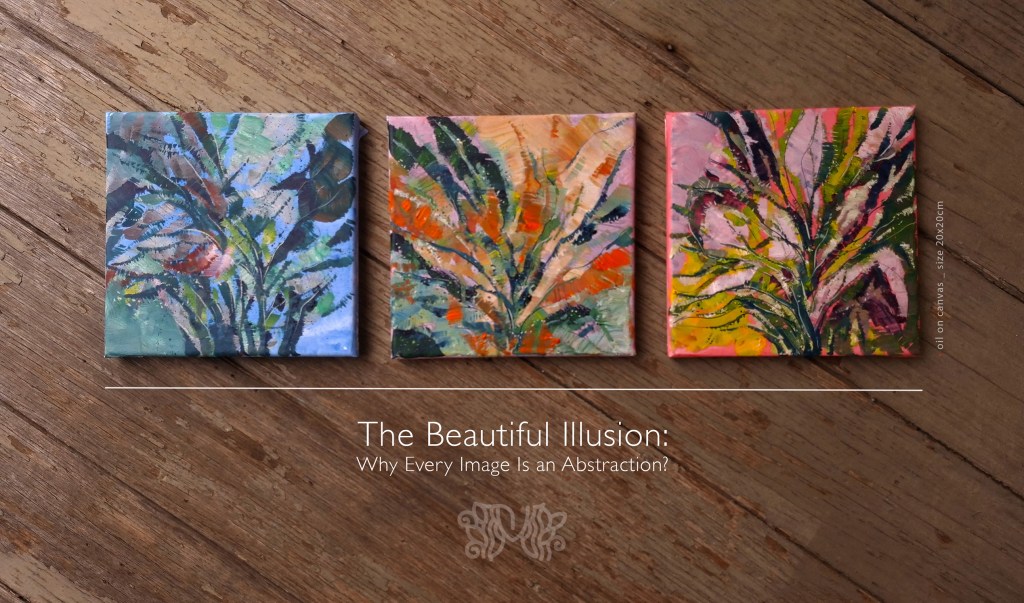
Every image is an abstraction, even a photograph. No picture ever captures the real thing itself; it only records a version of what once existed. When we take a photograph or paint a scene, we are not freezing reality but interpreting it. We shape it through light, perspective, time, and emotion. This simple truth may sound obvious, but it changes how we think about art and the act of seeing.
A photograph might seem objective, a direct window into the world. Yet even then, choices are quietly made: where to stand, what to include, when to click. Every decision filters reality through intention and feeling. The lens, like a brush, turns what is lived into what is imagined. The result is not the world itself but a reflection, a concept, an echo, a poetic reconstruction.
In this way, all pictures, from cave drawings to digital images, are symbolic. They speak in forms, lines, and gestures that stand for something else. Even the most realistic image is a metaphor. A shadow may suggest loss; a color may carry joy or sorrow. Metaphor is the secret grammar of visual art, the language that lets us communicate what cannot be spoken. This is why art moves us. We do not respond to the literal object in front of us but to the invisible conversation it starts, between reality and imagination, between the outer and inner world. What we see becomes a mirror for what we feel. Realism, then, is not truth itself but the art of believable illusion. The more powerful the realism, the more carefully it is crafted. When we look at a Vermeer or a Caravaggio, we do not marvel at their accuracy; we marvel at their control of illusion, how they make us believe in the stillness of a room or the glow of candlelight. In that belief, we surrender to art’s most beautiful deception.
The greater the art, the greater the illusion, not because it fools us, but because it awakens us to the nature of seeing itself. We never see the world as it is; we see it as it appears through the lenses of memory, emotion, and culture. Every image, then, invites us to question what we call real. is not about copying life but about revealing it. Every brushstroke, every photograph, is a translation of experience into symbol — a bridge between presence and absence, between the thing itself and its imagined shadow. And in that space between the two lies the mystery that keeps us looking.
 Art Rabbithole
Leave a comment